


Jun 4, 2026
Sim4Life V9.6: Fast Neural Response Prediction for Clinical Neurostimulation
Sim4Life V9.6: Fast Neural Response Prediction for Clinical Neurostimulation
Sim4Life V9.6 removes a long-standing computational bottleneck in neurostimulation modeling and delivers platform refinements that make the resulting workflows faster and more intuitive.
Computational neurostimulation studies typically combine:
• Anatomically detailed, personalized models,
• Micro-anatomical nerve or spinal root models,
• High-resolution low-frequency electromagnetic simulation,
• Neuron-level response modeling using multi-compartment cable models,
• Evaluation of safety and effectiveness metrics.
Sim4Life is explicitly designed to handle all of these components, pairing state-of-the-art numerical solvers with a user-friendly software environment.
However, biophysically-detailed neural simulations have long been a limiting factor. Multi-compartment modeling (e.g., NEURON) delivers high physiological fidelity, but at a cost that rules out routine optimization over electrode configurations, pulse waveforms, or patient populations.
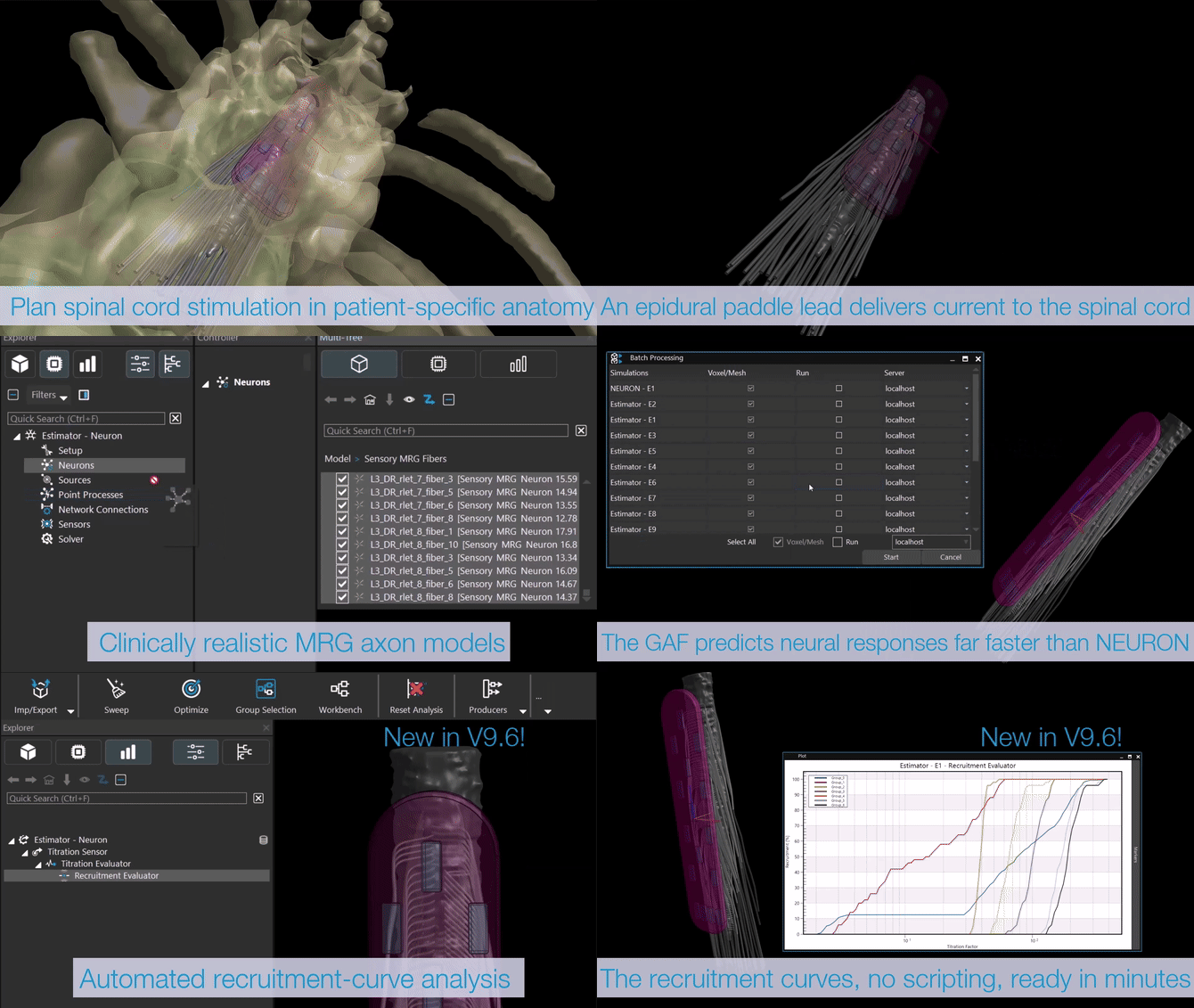
Sim4Life V9.2 introduced the Generalized Activating Function (GAF), a fast predictor of neural activation, initially supporting the simplified single-cable fibers used in low-frequency exposure safety assessment. The latest release – V9.6 – closes the gap to clinical planning: the same fast predictor now works with the McIntyre–Richardson–Grill (MRG) double-cable axon model, a formulation that captures mammalian myelinated-fiber biophysics with the accuracy clinical planning requires. Developed by IT'IS researchers in collaboration with NeuroRestore (EPFL/CHUV) and researchers at Friedrich-Alexander-Universität Erlangen-Nürnberg, the method reduces prediction cost by up to three orders of magnitude relative to NEURON while reproducing activation thresholds with near perfect accuracy.
The result: stimulation-response analyses now complete in seconds to minutes on a desktop machine, instead of hours or days. Validated in a clinically relevant spinal cord stimulation (SCS) planning workflow, the methodology reproduces results from [Rowald et al., Nature Medicine (2022)] and explores previously inaccessible parameter spaces.

Application Showcase
Predicting Neural Responses with the Generalized Activating Function
From Bottleneck to Clinically Practical Optimization
The story of the GAF in Sim4Life is the unification of speed and accuracy: a predictor fast enough for optimization, and accurate enough for the clinic. V9.2 delivered the speed for the simple, conservative models underlying safety standards. Now V9.6 extends performance to the clinically realistic fiber models that treatment planning and device optimization depend on.
Key questions for personalized SCS planning:
• Which dorsal root fibers will a given electrode configuration recruit?
• What stimulation amplitude achieves target recruitment without off-target activation?
• Can multipolar configurations and non-standard pulse waveforms improve selectivity and efficiency?
IT'IS developed and validated the GAF – a Green's-function-based formulation of the cable equation that:
• Reproduces NEURON-derived thresholds at R² = 0.99 and predicts spike-initiation location/timing,
• Runs up to 1000× faster on standard desktop hardware,
• Obeys the linear superposition principle for efficient multipolar electrode exploration,
• Generalizes across fiber types (unmyelinated Sundt, single-cable SENN, double-cable MRG),
• Captures pulse-shape effects with analytical time integration for common waveforms.
Validation reproduced a published clinical SCS planning pipeline, completing a full 16-electrode recruitment map in under 10 minutes versus over 24 hours using NEURON. Combined with gradient-based multipolar optimization, it was possible to raise the functional selectivity index for right hip flexion from 52% to 82%.
Please visit the deep-dive on sim4life.swiss to learn more.
From Application Insight to Platform Refinement
The GAF research pushed the platform with large anatomical projects, populations of hundreds to tens-of-thousands of fiber models, advanced Python scripting, and GPU-accelerated optimization. V9.6 further integrates the GAF into the platform and addresses the practical friction points this work surfaced.
Neuro — GAF for MRG-type models and automated recruitment curves:
The fast predictor introduced in V9.2 for unmyelinated and safety-relevant fibers now works with clinically realistic double-cable models of sensory and motor fibers. This makes the speed clinically actionable: fast threshold prediction for heterogeneous axon populations, on the fiber models treatment planning actually uses. Automated recruitment-curve analysis lets users evaluate fiber activation as a function of stimulation amplitude and compare configurations directly.
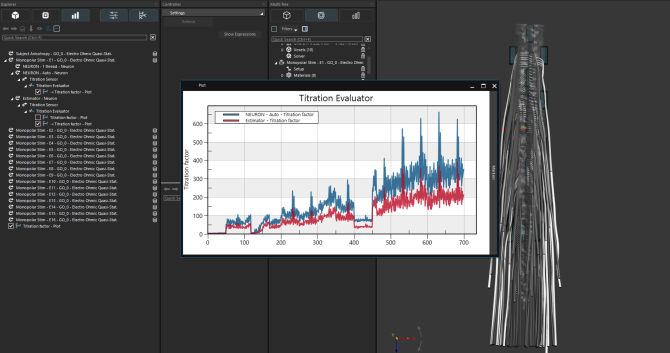
Automated recruitment-curve analysis in Sim4Life V9.6: GAF-predicted titration factors closely track NEURON across hundreds of fibers in a detailed spinal cord model, enabling fast prediction on the most realistic and relevant fiber models for treatment planning.
Furthermore, the latest Sim4Life tutorial (login required) demonstrates Sim4Life’s automated recruitment curve functionality by comparing three neural interface technologies stimulating the median nerve: a cuff electrode, a stent-like endovascular electrode, and a catheter-like endovascular electrode.
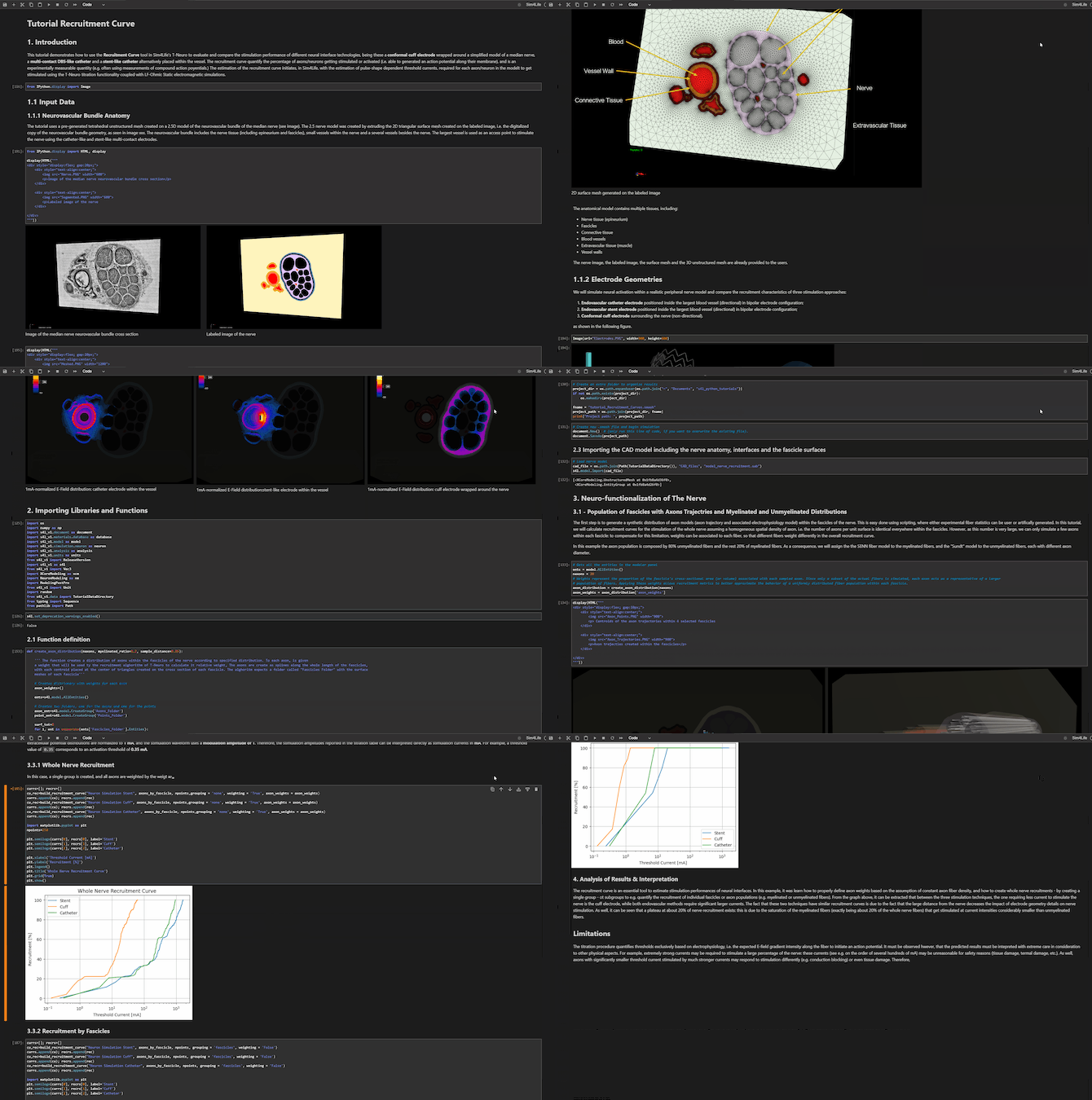
Evaluate and compare neurostimulation technologies with greater confidence using the new Recruitment Curve Evaluator, integrated into the T-Neuro module and powered by coupled EM-electrophysiology simulations. Generate recruitment curves and quantify stimulation performance with flexible pre-defined or custom metrics tailored to your application.
Performance — faster startup and modern cloud GPUs:
Opening of new and existing projects is faster and provides users with clearer feedback. The cloud backend supports NVIDIA Blackwell-based GPU hardware on AWS for demanding optimization workloads.
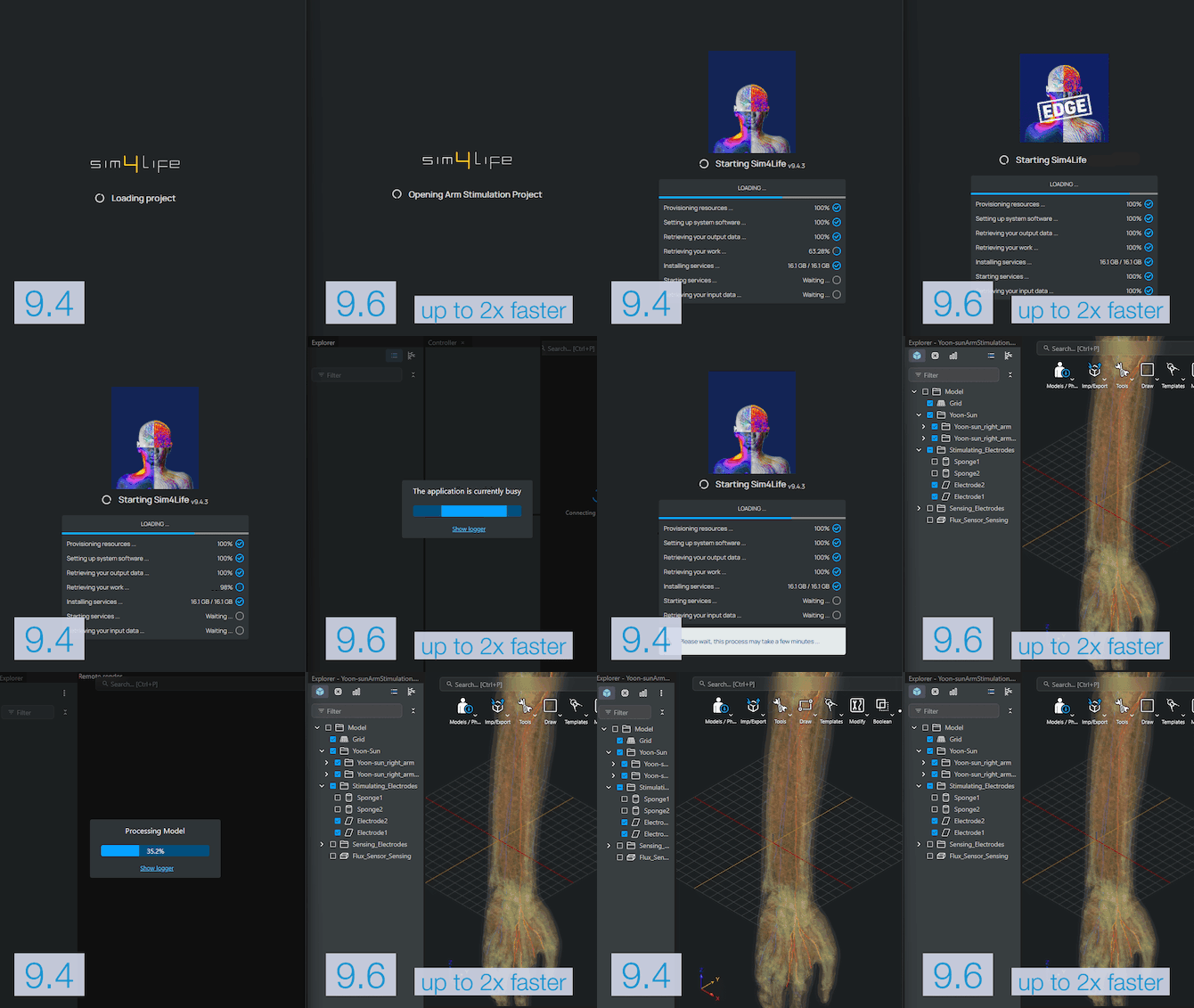
Faster, clearer startup in Sim4Life V9.6 (right) compared with V9.4 (left): Open projects and start modeling sooner.
Solvers — stronger thermal workflows:
Improved support for unstructured thermal grids, better interpolation handling, and additional plausibility checks for more accurate results and enhanced confidence.
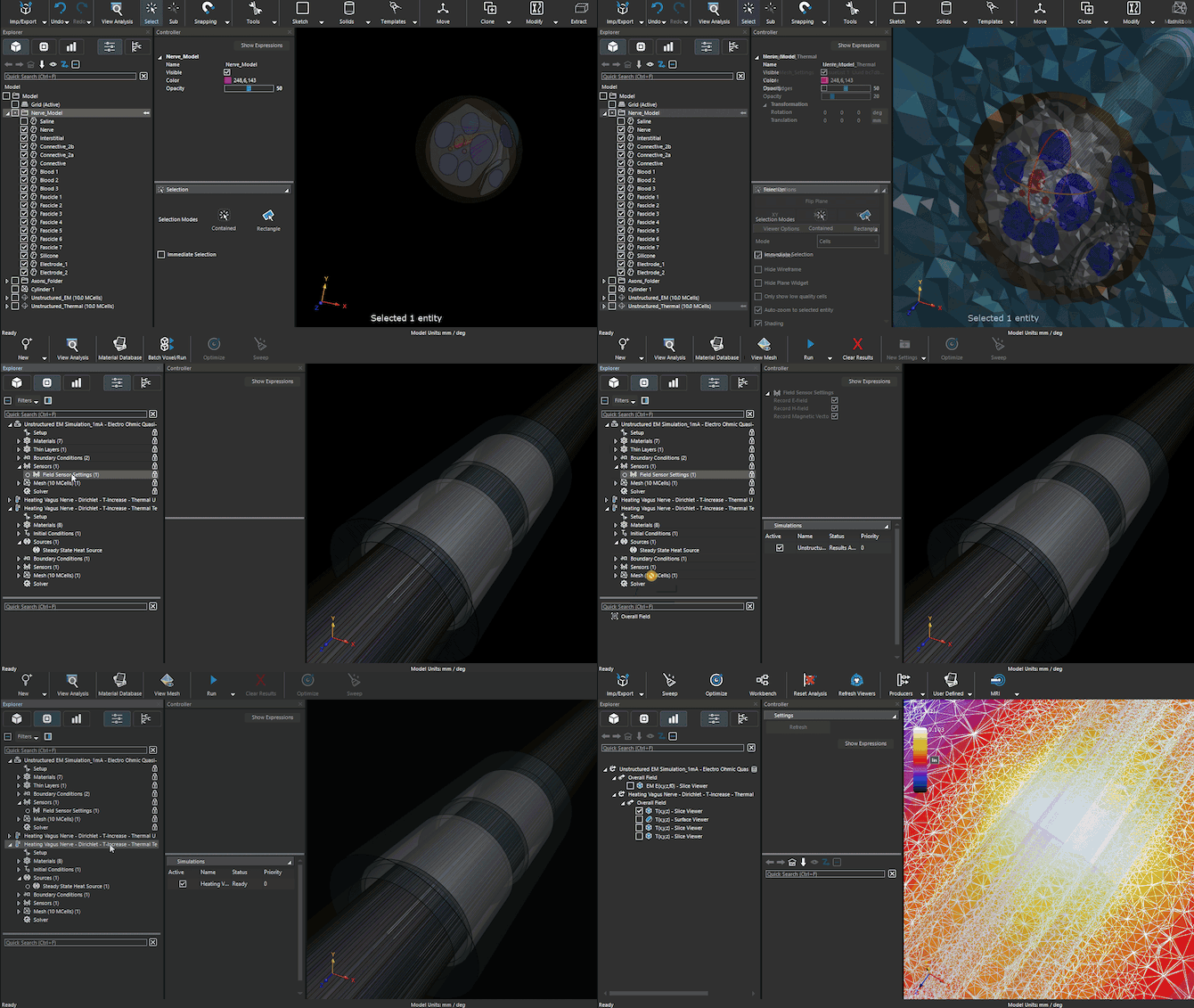
Unstructured thermal-grid handling in Sim4Life V9.6: Improved unstructured meshing and interpolation between rectilinear and unstructured domains ensure numerical accuracy, while additional plausibility checks boost confidence in the results.
UX/UI — more responsive and approachable:
Long-running operations, like meshing or rendering, no longer block the interface. A refreshed sidebar with icon-and-label rows, expandable categories, and hover flyouts improves navigation. Multi-input bucket workflows reduce repetitive setup. A new welcome experience guides users to tutorials and documentation.
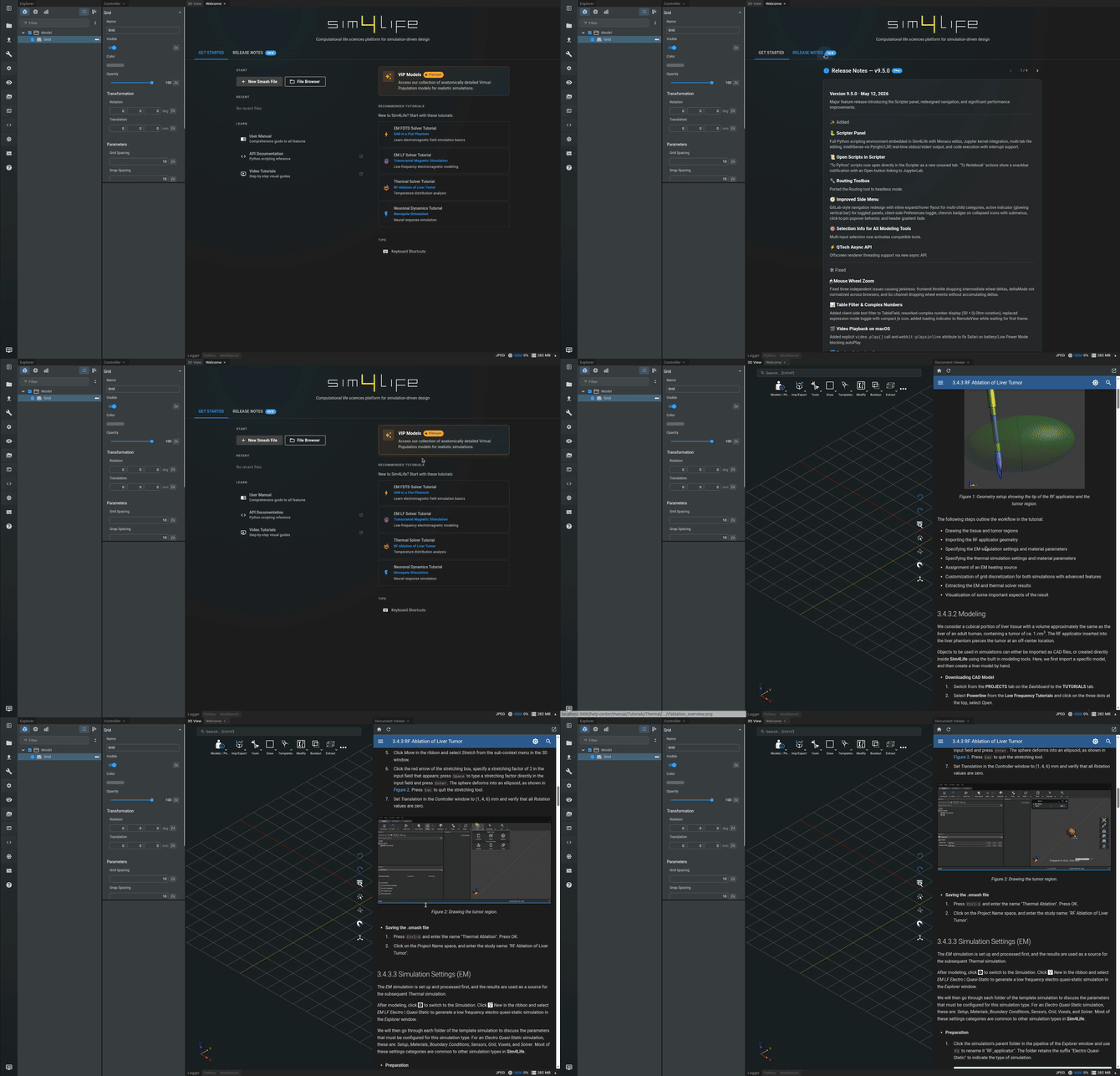
The refreshed welcome experience in Sim4Life V9.6: Tutorials, recent files, solver documentation, and release notes are surfaced directly at the application entry point.
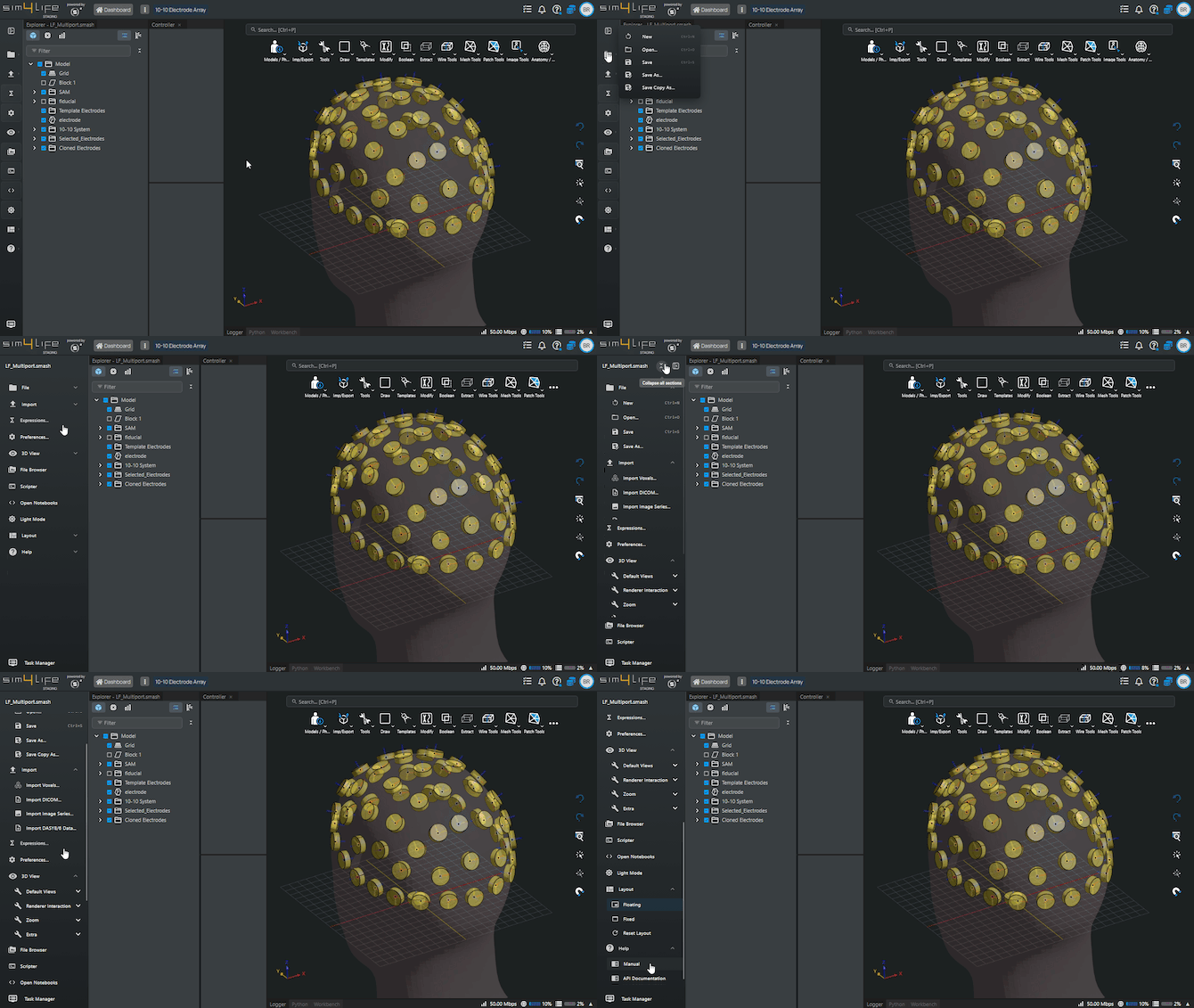
Refreshed sidebar and preferences in Sim4Life V9.6: Icon-and-label navigation, expandable categories, and hover flyouts replace the previous nested menus.
Help & Support — smarter assistance:
The AI assistant gains stronger documentation grounding and a more natural support tone. Support Center conversations are now integrated with email notifications, archive/active filtering, and support call scheduling.
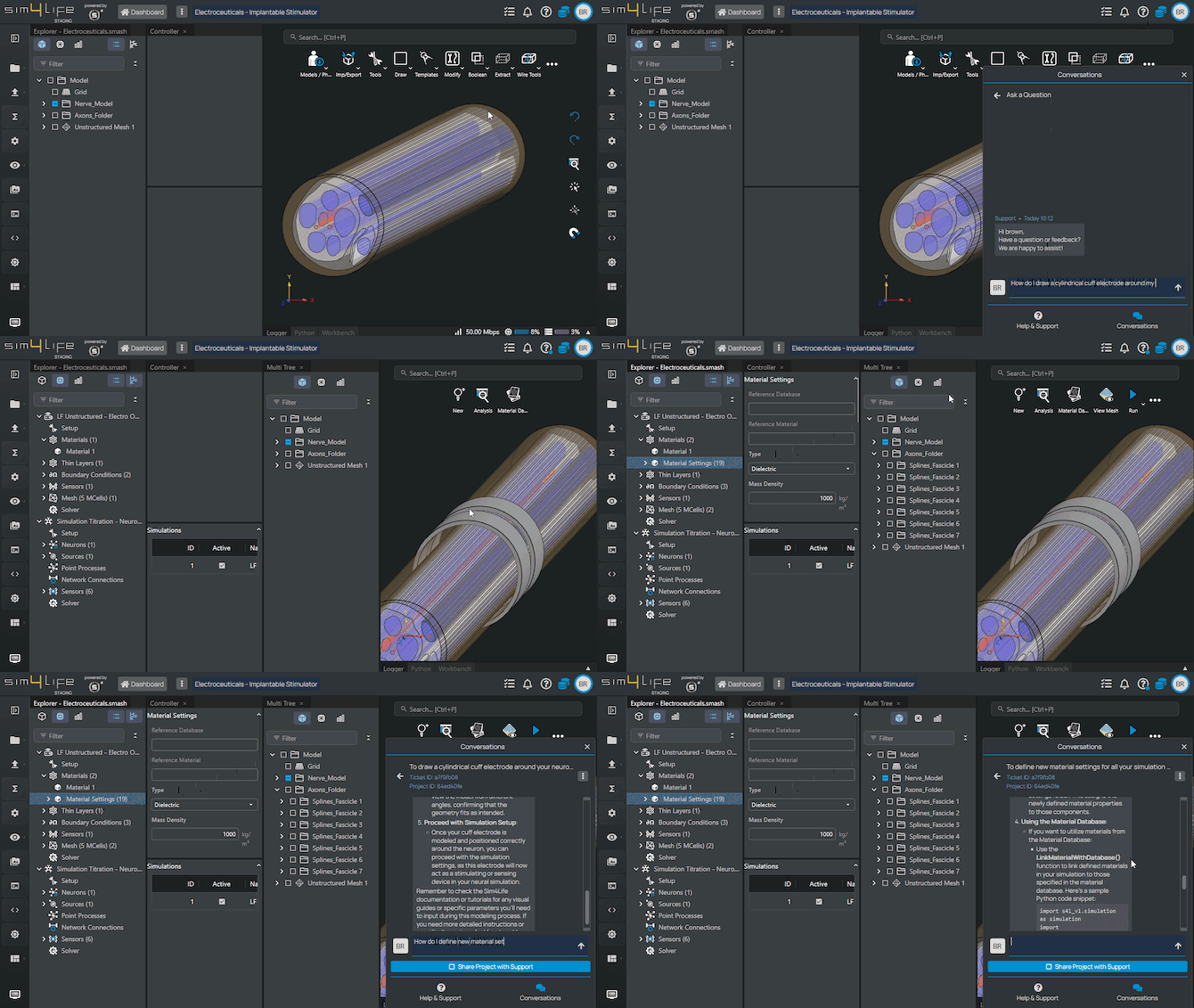
Smarter in-product assistance: the AI assistant draws on a grounded documentation context, with one-click escalation to human support when a query exceeds what it can handle confidently.
Processing — integrated scripter and cleaner standards workflows:
A redesigned Python scripter, now with multi-tab editing, intelligent auto-completion, and inline tracebacks, brings a modern coding experience into the project context. Cleaned-up standards-based post-processing workflows sure reliable analyses. TI Planning (TIP)-related model anonymization supports privacy-aware data handling.
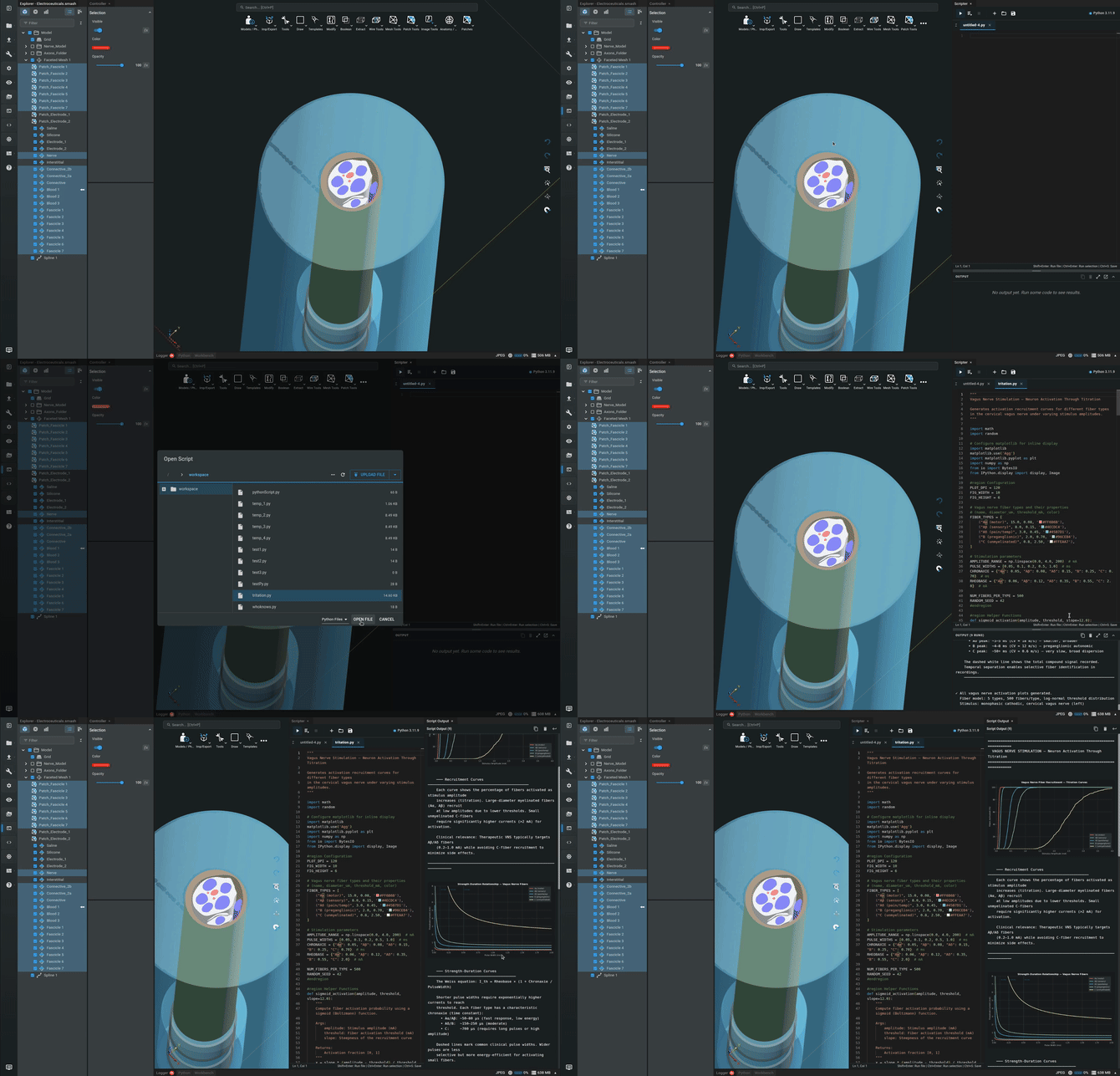
The integrated Python scripter alongside a live vagus nerve simulation: Multi-tab editing, live execution, and inline tracebacks bring expert automation into the project context, with recruitment and strength–duration curves available as immediate analysis outputs.
Sim4Life V9.6 connects anatomy, physics, physiology, and optimization in a single, reproducible in silico environment. For neurostimulation R&D teams, it offers integration, control, and efficiency to translate mechanistic understanding into clinical designs.
Customized Research
Interested in producing regulatory-grade model evidence, running in silico studies, or developing a Sim4Life-based planning tool for your device, protocol, or patient population? Contact the IT’IS Customized Research experts to explore customized solutions for your application.
Sim4Life V9.6 is available today on all our cloud platforms for commercial users, researchers, and students.
The desktop Installer is available here.
For further information, please email us at s4l-sales@zmt.swiss or call +41 44 245 9765.
Kind regards,
The Sim4Life Team


