


Mar 5, 2026
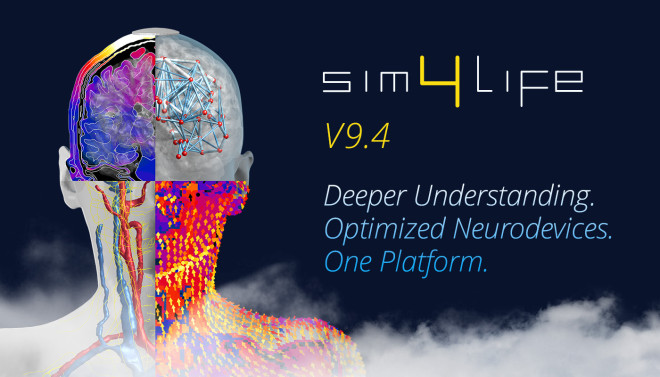
Sim4Life V9.4 for Computational Neurostimulation
Sim4Life V9.4: Refined by Research and Real-World Applications
Sim4Life V9.4 further strengthens its position as the platform of choice for neurostimulation modeling, with targeted improvements to quality, robustness, and usability driven by demanding real-world application work.
Neurostimulation studies often require more than just electric field mapping. Modern workflows typically involve:
• anatomically detailed personalized models,
• highly resolved low-frequency electromagnetic simulation,
• neuron-level response modeling,
• evaluation of safety-relevant quantities, such as induced tissue heating and charge injection.
Sim4Life integrates these components into a single computational framework, enabling controlled in silico studies that connect image-based modeling, physics, and physiology.
Version 9.4 builds on this foundation. Two recent customized research projects – carried out by Z43 partner the IT'IS Foundation for industrial customers with concrete design, regulatory, and translational needs – illustrate both the platform's capabilities and the type of demanding applications that directly informed the refinements in this release.
Application Showcases
Case Study 1
Personalized tPCS Modeling and Neuronal Response Analysis – IT’IS Foundation in Collaboration with AscenZion
Transcranial pulsed current stimulation (tPCS) is an emerging non-invasive neuromodulation approach that aims to modulate brain function and treat conditions such as cerebral palsy and autism using low-intensity pulsatile currents.
As research progresses, central questions remain:
• How does tPCS interact with neurons in the brain, and why is it effective when transcranial alternating current stimulation (tACS) is not?
• What is required to build a personalized tPCS planning tool – one that accounts for tPCS-specific neural responses and improves treatment effectiveness?
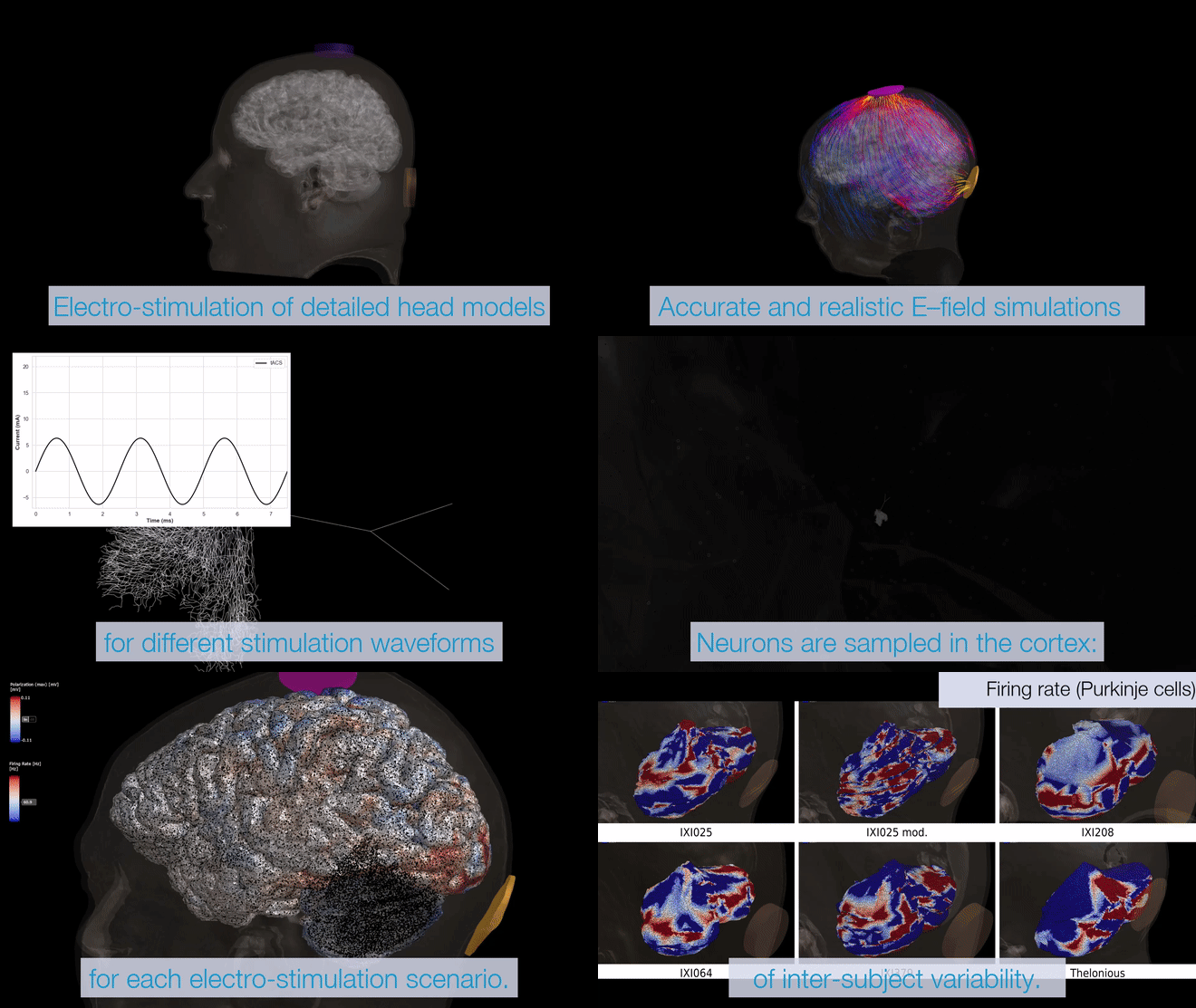
To address this, IT’IS executed a customized research study combining:
• highly detailed, personalized anatomical head models,
• low-frequency electromagnetic simulation including electrode-tissue interface effects,
• neuron-level response modeling across cortical cell types,
• population-level analysis of exposure and response variability.
The results revealed fundamental differences in how tPCS and tACS interact with brain neurons, showing that tPCS effectively polarizes pyramidal neurons in the cortex and modulates cerebellar Purkinje cell firing rates, consistent with observed therapeutic responses. Cross-subject comparison confirmed that variability in skull structure and brain folding significantly affects outcomes, establishing requirements for anatomically personalized treatment planning.
Please visit the deep-dive on sim4life.swiss to learn more.
Case Study 2
In Silico Vagus Nerve Stimulator: Design, Optimization, and Safety Evidence Generation – IT’IS Foundation
Implanted peripheral nerve stimulation requires effective recruitment or blocking of target nerve fibers while ensuring safety. The design space is large: electromagnetic exposure, axonal electrophysiology, tissue heating, and their interactions must all be accounted for. Credible in silico regulatory evidence demands both uncertainty quantification and experimental validation.
Key questions include:
• What stimulation current is required to achieve defined recruitment or conduction blocking levels?
• What temperature rise accompanies those currents?
• Which design parameters result in a superior safety and effectiveness profile?
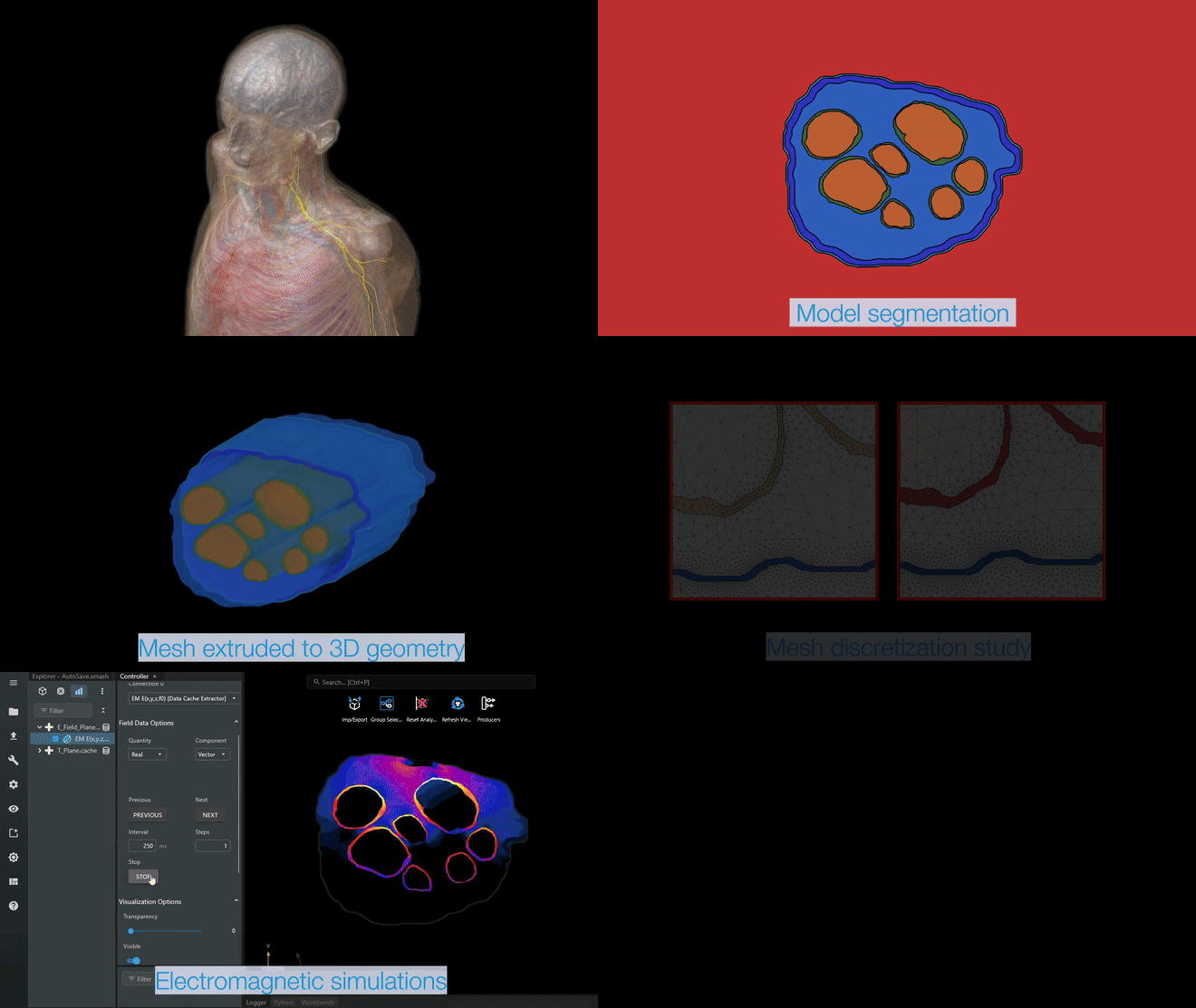
To address these, IT'IS executed a customized research study for a large medical device manufacturer, combining:
• a multi-fascicular cervical vagus nerve model constructed from segmented histological data, with micrometer-scale features and realistic fiber populations,
• electromagnetic, electrophysiological, and thermal simulations using quality-assured models and tissue properties in Sim4Life,
• parameterized modeling and multi-objective optimization (Model Intelligence Hypertools) to identify superior designs, and
• systematic convergence analysis and surrogate model-based uncertainty quantification (Model Intelligence Hypertools).
The results identified designs with superior safety and effectiveness profiles. Key predictions were confirmed by ex vivo experiments.
Please visit the deep-dive on sim4life.swiss to learn more.
From Application Insight to Platform Refinement
Both studies pushed the platform hard – multi-scale meshing with tens of millions of cells, extensive Python scripting, long simulation campaigns, and complex 3D visualization of results across multiple anatomical models. In the process, they exposed practical friction points: places where stability under heavy workloads, interface consistency, scripting–GUI alignment, and discoverability of tools and workflows could be improved.
Sim4Life V9.4 addresses these directly.
Stability, performance, and quality assurance:
Improved robustness under demanding workloads, smoother handling of large models, clearer feedback during long-running operations, and a faster patch delivery cycle help ensure that complex projects remain stable and reproducible.
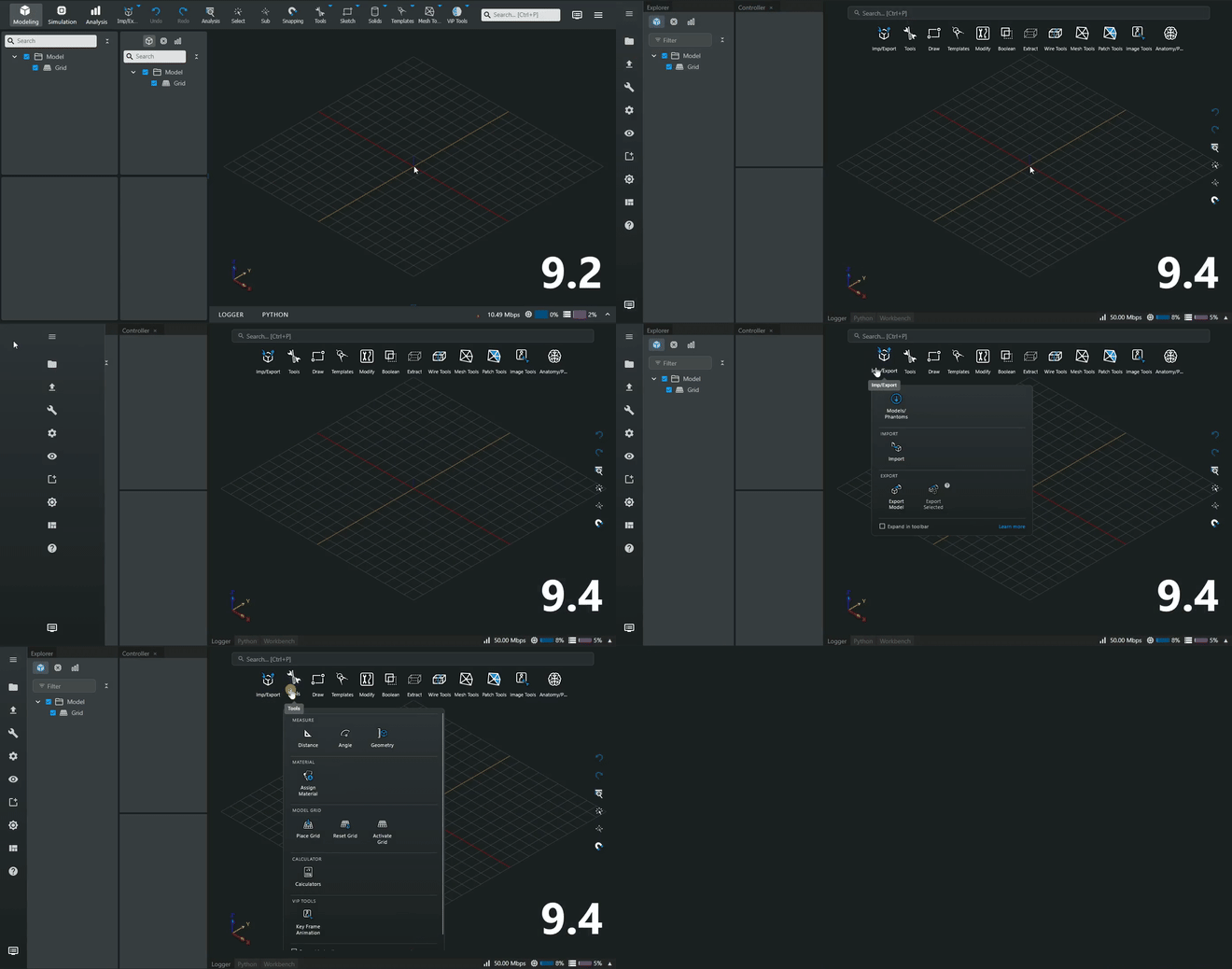
A cleaner, more consistent user interface:
Streamlined tool organization reduces visual clutter and improves focus during multi-step simulation workflows.
Integrated AI assistant:
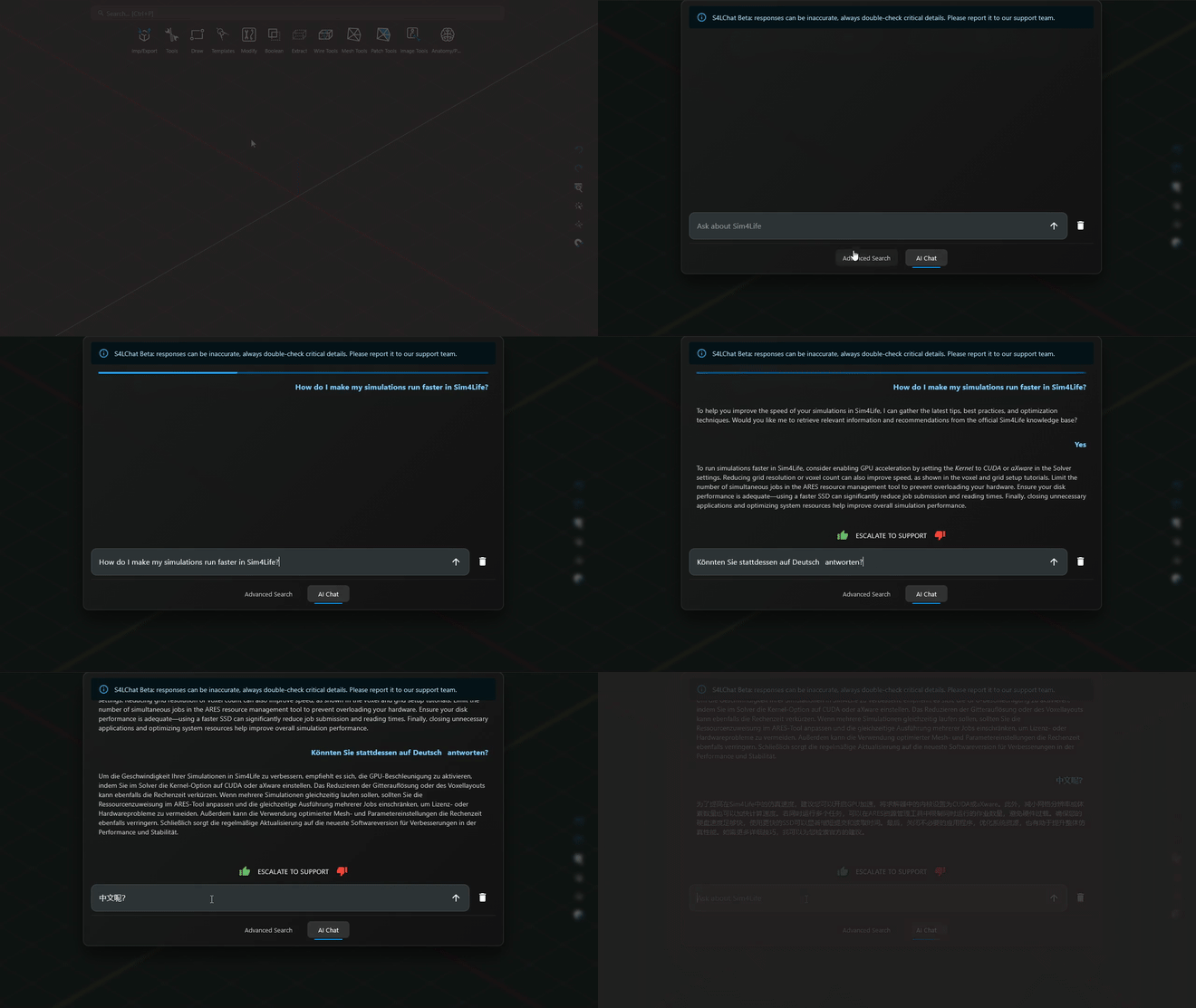
Directly accessible from the search bar, the AI assistant answers questions about tools, workflows, solvers, and APIs, helping users navigate modeling tasks, understand concepts, and locate relevant functionality more efficiently.
Stronger scripting and documentation coherence:
Improved alignment between GUI and Python workflows, a clearer API structure, and more accessible documentation support the kind of large-scale, script-driven studies illustrated above.
Sim4Life V9.4 demonstrates how anatomy, physics, and physiology connect within a single, reproducible in silico environment. For research and development teams working on neurostimulation – whether in transcranial brain stimulation or implanted peripheral nerve interfaces – the platform provides the integration, numerical control, and application-tested robustness needed to move from mechanism to design to regulatory evidence.
Now Available
The fully refined power of Sim4Life V9.4 is available as of today for and has been rolled out for all our cloud versions for commercial users, researchers, and students.
The Sim4Life V9.4 Desktop Installer is available here.
If you are interested in collaborating with our experts on specific studies, contact the IT’IS Customized Research team to explore a research solution for your application.
For further information, please email us at s4l-sales@zmt.swiss or call +41 44 245 9765.
Kind regards,
The Sim4Life Team


